Brewing Tools
Paper Versus Metal Coffee Filters
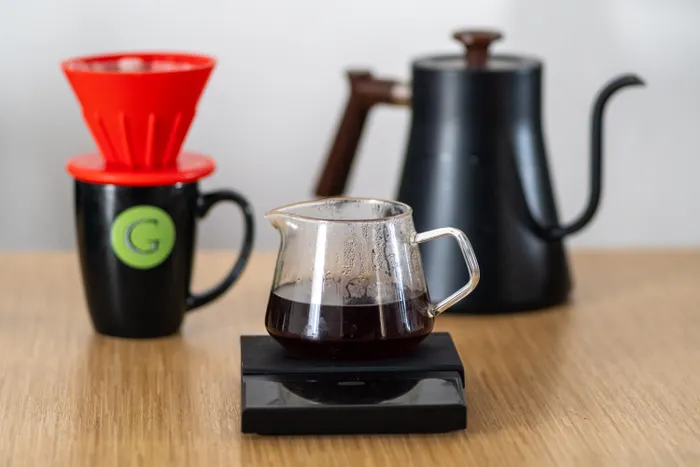
Paper and metal filters change the body, clarity, cleanup, and flow of brewed coffee. Neither material is universally better. The useful choice depends on the brewer, preferred texture, maintenance habits, and whether the user wants a disposable or reusable filter system.
Paper captures most fine particles and a larger share of coffee oils, usually producing a clearer-looking cup with a lighter texture and more separated flavors. Paper filters are convenient to lift out with the grounds, but they must match the brewer's shape and size. A folded, collapsed, or poorly seated filter can cause overflow or bypass.
Rinse a paper filter with hot water when the method and manufacturer permit it. Rinsing can remove loose paper taste, warm the brewer, and help the filter adhere to the walls. Discard the rinse water before adding coffee. Bleached and unbleached papers can both work; manufacturing quality and fit often matter more than color.
Metal mesh allows more oils and fine particles into the beverage, creating fuller body and sometimes more sediment. It is reusable and avoids keeping a supply of paper, but it needs thorough cleaning after every brew. Grounds lodged in mesh slow flow and become stale. Inspect the frame and seams for damage that could release grounds or create sharp edges.
Filter material affects grind adjustments. A metal filter may drain faster or permit fines through, while a thick paper can add resistance. When switching, return to a reasonable baseline and adjust grind by taste and flow. Do not assume the recipe transfers unchanged. Some brewers are designed around a specific proprietary or structural filter, and substitutions may be unsafe or ineffective.
Cleanup should include the full lifecycle. Paper with coffee grounds may enter an accepted compost or organics program, depending on local rules and filter materials. Metal requires water and washing effort but can last through many uses. A damaged reusable filter should be replaced rather than repaired with adhesive or improvised mesh around hot liquid.
People sometimes discuss filtered and unfiltered coffee in relation to health. Individual dietary questions and medical conditions belong with a qualified healthcare professional. A home-brewing guide can explain physical filtration differences without claiming a particular filter treats or prevents disease.
Try a controlled comparison using the same coffee, ratio, water, and brewer when compatible. Adjust grind only after tasting the initial difference. Note clarity, texture, sediment, aroma, drawdown, and cleanup. Someone who values a crisp cup may prefer paper, while another who enjoys weight and oils may choose metal.
Keep both options if they serve different occasions. Paper can simplify a clean morning brew, and metal can provide a fuller weekend cup. The decision becomes straightforward when it is based on sensory preference, proper fit, and willingness to maintain the filter rather than a claim that one material is objectively superior.
Filter fit should be checked before coffee is added. Place the filter dry, observe seams and edges, then rinse and confirm it remains seated. If it buckles or floats, review folding and brewer compatibility. A correct filter leaves enough basket headspace for coffee expansion and water. Never stack extra filters merely to slow a fast brew; adjust grind and technique instead.